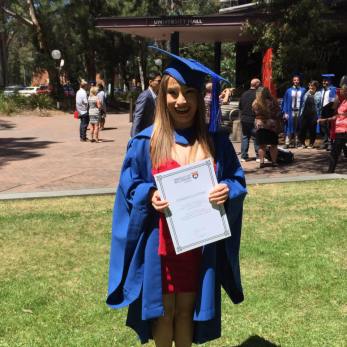
Weighing Up How Childhood Obesity is Portrayed Within Australian Culture:
A Critical Analysis of Media and Communications Messaging
Chantelle Vella
Childhood obesity is the uncomfortable elephant in the room that we (even as health professionals), often struggle to address when it crops up in day-to-day conversation.
There is a common view held by many, that childhood overweight and obesity, is not a simple problem to “fix”. This has unfortunately been aggravated by a long and widely unsettled history of conflicting media, public, health professional and political discourse and framing of obesity in general, both globally and locally within Australia.
You only need to turn on the television, flick through the newspaper, listen to the radio or scroll through your social media feeds to be told that we are currently in the midst of a childhood “obesity crisis”, which doesn’t seem to be budging anytime soon.
For those of you who don’t know me, I’m not afraid to push boundaries and speak my mind. I have written this to challenge myself, and challenge you also, to consider the current and future direction of dialogue surrounding childhood obesity and everything it touches.
To put it bluntly, the way we are currently talking about childhood obesity, is not leading to many or any desirable outcomes without causing some sort of upset, uproar, or very ‘fixed’ polarising and dividing opinions*.
*Note that this of course too applies to the general obesity discourse as a whole.
We must therefore overcome the resistance and reluctance to participate in such difficult and painful conversations because we know there will always be conflicting voices that seem to scream louder than our own.
So, what’s the sitch on childhood obesity in Australia?
According to the World Health Organisation 1 overweight and obesity is defined as “abnormal or excessive fat accumulation that presents a risk to health”. This energy imbalance is strongly influenced by a complex interaction of social, physiological, psychological, environmental, genetic and behavioural factors 2 often said to be fostered by individuals and communities living in an obesogenic environment conducive of poor health outcomes3. These factors, particularly living a sedentary lifestyle, often seen to be coupled with a high consumption of energy-dense, nutrient-poor and ultra-processed food, may impair or interfere with the normal functioning of all human bodily systems, inclusive of but not limited to the development of insulin resistance, type 2 diabetes, dyslipidaemias, fatty liver disease, hypertension, respiratory disorders, cancer and cardiovascular disease as comorbidities 4,5 long-term.
According to the latest data from the Australian Bureau of Statistics (ABS) collated in 2015, at least 1 in 4 Australian children are now classed as overweight or obese, with 63.4% of adults also falling into an overweight or obese weight range 6 – a concerning trend to observe considering children who grow up as overweight or obese are more likely to stay overweight or obese as adults 7.
Childhood overweight and obesity is traditionally measured using the international standard Body Mass Index (BMI) cut-off points; 25 kg/m2 for overweight (preobese populations) and 30 kg/m2 or over for obese child populations aged over two years of age8. Childhood obesity is reported to be a huge burden to the Australian health care system, with new research finding early childhood obesity alone in children under five years old costs us $17 million per year 9. Yet to counter this, “for any successful intervention among 2 to 5-year-olds, the implication is for every child avoiding obesity, there are likely to be immediate savings in direct healthcare costs” 10.
On a policy level, the implementation of a sugar sweetened beverage tax, in addition to reducing the exposure of marketing energy-dense nutrient-poor foods and beverages as reinforced by the World Health Organisation’s Commission on Ending Childhood Obesity (ECHO) 11, are projected to be projected to be the two most cost-effective interventions curbing environmental diet-related influences on childhood obesity – saving $55 and $38 for every Australian dollar invested respectively 12.
What is the current dialogue on childhood obesity in Australia?
It seems that anyone and everyone wants to join in on the conversation surrounding childhood obesity and its prevention. And that’s great – except for the fact it is remarkably obvious that we’re not all on the same page. It is therefore critical to acknowledge here, where the societal blame for the childhood obesity epidemic has originated from, and why we are even in this situation in the first place.
Those often standing directly in the firing line include; the child’s (“irresponsible”) parents, the powerful food industry for poorly self-regulating (discretionary) food and nutrition labels, intensive food advertising and marketing to children, governments for not making [childhood] obesity prevention and management a political priority, as well as the fragmented public health community themselves for failing to “speak with the one voice” and instil confidence on finding an agreeable path forward 13 .
This frustration is equally shared among my colleagues in the nutrition and dietetics profession such as Accredited Practising Dietitian Dr Helen Vidgen, who at 2017’s World Congress of Public Health acknowledged, “If a family want to get some support from a health professional [in managing childhood obesity] there really isn’t a clear place for them to go…” 14.
It definitely doesn’t help that nearly everywhere we turn, messaging about childhood overweight and obesity often comes across as ruthless, shaming and parent-blaming…
EXHBIT 1:
Scaremongering social marketing advertisement tactics play on parents’ guilt
Probably one of the most outrageous examples of what not to do when discussing childhood obesity with parents was demonstrated by Sydney’s Precinct Studios 2010 ‘Break the Habit’ childhood obesity awareness television commercial15 which controversially compares the consumption of junk food to heroin addiction. It boldly confronts parents asking,
“You wouldn’t inject your child with junk. So why are you feeding it to them?”
Such an attempt of instilling a deep sense of fear (and guilt) within parents as the primary target audience, in the long term, may fail to facilitate desired health-related behaviour change outcomes 16 .Once this fear and guilt stimulus is gone, it then will most likely cease to be firmly planted in our minds, which of course is sadly why many social marketers take advantage of this and continue to ‘keep the fear alive’ – a psychologically damaging and highly unethical approach that is bound to do more harm than good overtime.
EXHIBIT 2:
Reality television showcasing parent-blaming as the “new normal”?
The childhood obesity blame-game is further embodied on “reality” television shows aired in Australia, such as Supersize vs Superskinny Kids 17 as well as other traditional media sources illustrating the everyday struggles faced by overweight and obese children and their families. The show itself though, captively depicts their desperation to live a “normal” healthy life as well as tears, and ongoing “battles” with overeating. Their quest for change is guided by a team of medical professionals in a clinical setting, as well as through the eyes of a patient also receiving treatment to overcome their struggle with anorexia nervosa through the exchange of daily meals and life experiences throughout the show – essentially acting as a harsh call for parental discipline, to “stop being a pal, and start being a parent”.
Despite this, it is evident that such threatening, demeaning themes are still well entrenched within mass media messaging, almost a decade later. News reports and stories centre themselves upon, and frequently rehash ‘shocking’ statistics consequently dubbing childhood obesity as “the new normal” 18 a ‘crisis’, a ‘burden’ and ‘epidemic growing out of control’ – all ways of attempting to build a case for urgency of action – something I feel we are concerningly becoming more and more desensitised to.
EXHIBIT 3:
Snap to it: Imagery of childhood obesity out to feed us the ‘ugly truth’ – and it’s not pretty
The circulation of photos and video footage in the media featuring overweight and obese children usually accompanied with greasy fatty foods or sugary beverages in their hands is equally as rife and confronting as some of the written or verbal commentary about obesity, consequently eliciting negative and emotionally-charged responses by viewers.
Hence why I deliberately chose not to feature an image of child portrayed in this patronising and stereotypical way. Thus, the selection of media and stock imagery, particularly in regard to obesity, must be greatly considered to avoid reinforcing and normalising stigmatisation, and unfairly judge a person, their body or their story before being delving further into its broader context and meaning. Images truly speaks a thousand words and reciprocate the powerful role of validating the message one is trying to convey. My advice therefore is to be conscious and wary of others wrongly seizing the advantage of this opportunity as this may directly or indirectly reveal their true colours or harmful intentions in relaying their point of view.
And speaking of images… picture books are also an easily accessible, and usually entertaining medium for children and their parents to gain health education or knowledge – with the added advantage of visually conveying whereby the emotive nature of particular conversations through storytelling. The recently published Don’t call me fat – A first look at Obesity 19 is one that could inflict the opposite and wrongly desired effect to mainstream evidence-based obesity prevention efforts, potentially damaging a child’s psychological state, perception of body image and self-esteem by shedding obesity in a negative light:
‘It doesn’t matter whether you are a child or an adult, weighing more than is healthy can stop you from doing fun things like running, jumping, swimming and climbing as far and fast as others…It can be hard to find clothes that feel comfortable. And that can make you feel as if you are very different from others and that you don’t fit in.’
Yep. The author actually said those awful things.
*********************************
There is indeed an endless amount of emerging ethical considerations that must be addressed to overcome prominent hurdles and barriers to achieving individual, community and population-level healthy sustainable behaviour change from improving our nutritional status, to engaging in physical activity from an early age as possible.
And while this most certainly opens up an entirely new conversation about obesity which we should simultaneously engage in, one of the most notably significant of these is the critical need to shift our focus “from an outcome to a behaviour to something that people can control” or become a ‘natural’ part of daily life because often “the obese individual is victimised without being given a solution” 20 as Dr David Katz rightly recognises.
Weight-biased bullying can negatively impede on the psychological wellbeing of overweight and obese children, where Bridger and Wareham 21 suggest that a more holistic approach be taken ‘beyond the BMI’ – something I am open to exploring in due course.
Yet, overall, from this empirical survey on childhood overweight and obesity, it can be learned that there are many inconsistencies in media and communications which urgently need to be resolved. Health communicators must craft childhood obesity-related public health messages much more humanely, being personally relevant, meaningful and practical for individuals (parents and children) to grasp. However, the real challenge here is to not to point the blame at one particular group or factor while simultaneously, sensitively softening the use of harsh vernacular to create a clear and convincing call to action which will still be followed through by to help improve health outcomes, without arousing unnecessary feelings of guilt or shame that often comes with dealing with weight management and obesity prevention in children and adults alike. It therefore goes without saying the ongoing metaphor of the obesity “war” needs to be dropped and alternatives to be reconsidered.
So, where should we take the conversation on childhood obesity from here?
Find out my personal thoughts as this series continues over the coming months! In the meantime, subscribe to my blog and connect with me @nutritionmunch on Facebook, Twitter and Instagram to keep the dialogue flowing.
Till next time,
Chantelle x Nutritionist – BSc, ANutr
BITE-SIZED AUTHOR BIO
Chantelle Vella is a tertiary-qualified Registered Associate Nutritionist with The Nutrition Society of Australia, Master of Health Communication student at The University of Sydney, and brains behind the blog NutritionMunch. Chantelle’s nutrition mission in a nutshell is to change-up the conversation surrounding health and wellbeing in a deep, meaningful, positive and thought-provoking way. Chantelle’s current passions and interests lie mainly in the areas of paediatric nutrition, health, nutrition and science communication, community and public health nutrition, food sociology and civic dietetics, and the emerging field of arts in health and each of their respective and creative applications in humanising all facets of health and healthcare.
References
- World Health Organisation. Global Strategy on Diet, Physical Activity and Health. 2017.
- Vandenbroeck, P., Goossens, J., Clemens, M. Obesity System Influence Diagram ShiftN. 2007.
- Lake A, Townshend T. Obesogenic environments: exploring the built and food environments. The Journal of The Royal Society for the Promotion of Health. 2006;126(6):262-7
- Porth, C.M., Grossman, S. Porth’s Pathophysiology: Concepts of Altered Health States 9th Ed. Lippincott Williams and Wilkins. 2014.
- Schelbert KB. Comorbidities of Obesity. Primary Care: Clinics in Office Practice. 2009;36(2):271-85.
- Australian Bureau of Statistics. National Health Survey: First Results, 2014 – 2015. ABS (Cat. no. 4364.0.55.001). Canberra, Australia: ABS. 2015
- Venn AJ, Thomson RJ, Schmidt MD, et al. Overweight and obesity from childhood to adulthood: a follow-up of participants in the 1985 Australian Schools Health and Fitness Survey. Medical Journal of Australia. 2007;186:458.
- Cole TJ, Bellizzi MC, Flegal KM, Dietz WH. Establishing a standard definition for child overweight and obesity worldwide: international survey. BMJ: British Medical Journal. 2000.
- Brown V, Moodie M, Baur L, Wen LM, Hayes A. The high cost of obesity in Australian pre-schoolers. Aust N Z J Public Health. 2017;41(3):323-4.
- Hayes A, Chevalier A, D’Souza M, Baur L, Wen LM, Simpson J. Early childhood obesity: Association with healthcare expenditure in Australia. Obesity (Silver Spring, Md). 2016;24(8):1752-8.
- World Health Organisation. Report of the Commission on Ending Childhood Obesity (ECHO). Geneva, Switzerland. 2016.
- Bauman A, Bellew B, Boylan S, Crane M, Foley B, Gill T, King L, Kite J, Mihrshahi S. Obesity Prevention in Children and Young People aged 0-18 Years: a Rapid Evidence Review brokered by the Sax Institute. Full Technical Report. Prepared for the NSW Ministry of Health: Sydney. Physical Activity Nutrition Obesity Research Group, The University of Sydney, 2016.
- Baker, P. Fat nation: The rise and fall of obesity on the political agenda. 2017. Available from: https://theconversation.com/fat-nation-the-rise-and-fall-of-obesity-on-the-political-agenda-72875
- Wiedersehn, S.Obese kids have nowhere to go: study. 2017. Available from: http://www.news.com.au/national/breaking-news/obese-kids-have-nowhere-to-go-study/news-story/63870061a11ff055cd767ccfa6c6b8d1
- Motteram, H. Break the Habit [television advertisement]. The Precinct Studios. Sydney, Australia. 2010.
- Soames Job RF. Effective and ineffective use of fear in health promotion campaigns. American Journal of Public Health. 1988;78(2):163-7.
- Supersize vs Superskinny Kids, episode 1. 2013. [Television program]. Retrieved from https://www.youtube.com/watch?v=sKcCho6RVgc
- Alexander, H. Obesity is the new normal with one in five children overweight or obese. The Sydney Morning Herald. 2016. Retrieved from http://www.smh.com.au/national/health/obesity-is-the-new-normal-with-one-in-five-children-overweight-or-obese-20160915-grhdb6.html
- Thomas, P. Don’t Call Me Fat: A first look at Obesity. 2014. Hachette Children’s Group, Great Britain.
- Katz DL, Murimi M, Pretlow RA, Sears W. Exploring Effectiveness of Messaging in Childhood Obesity Campaigns. Childhood Obesity (Formerly Obesity and Weight Management). 2012;8(2):97-105.
- Bridger, T. L., & Wareham, A. Beyond BMI: The next chapter in childhood obesity management. Current Obesity Reports, 2014;3(3), 321-329.